


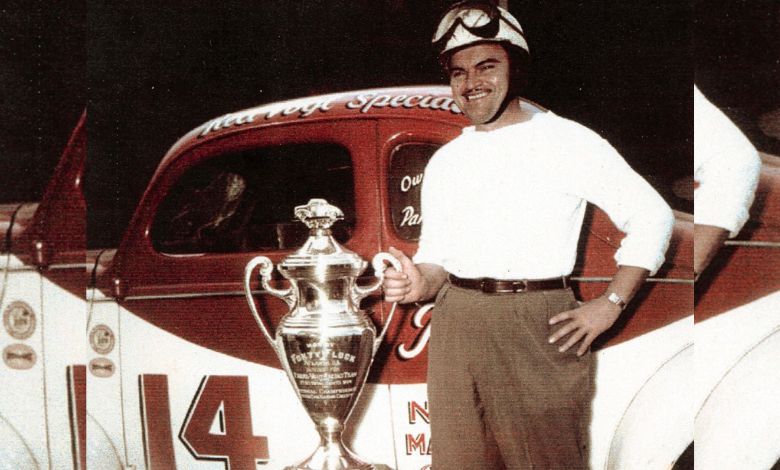
Raymond Arthur Parks was an American civil rights activist and professional barber. Although widely identified as Rosa Parks’ husband, he had already become involved in racial justice campaigns before her defining role in the Montgomery Bus Boycott.
Parks participated in efforts supporting the Scottsboro Boys, joined civil rights organizations in Montgomery, and advocated for voting and labor rights. Rosa Parks later described him as “the first real activist I ever met,” reflecting his influence during her early involvement in organized activism.
Profile Summary
| Field | Details |
|---|---|
| Full name | Raymond Arthur Parks |
| Born | February 12, 1903 |
| Birthplace | Wedowee, Alabama, United States |
| Died | August 19, 1977 |
| Age at death | 74 |
| Place of death | Detroit, Michigan, United States |
| Nationality | American |
| Occupations | Civil rights activist and barber |
| Known for | Civil rights work and marriage to Rosa Parks |
| Spouse | Rosa Parks |
| Marriage | December 18, 1932–August 19, 1977 |
| Associated movement | American Civil Rights Movement |
| Burial place | Woodlawn Cemetery, Detroit, Michigan |
Early Life and Background
Raymond Arthur Parks was born on February 12, 1903, in Wedowee, Alabama. His parents were David Parks, a carpenter, and Geri Culbertson Parks.
Biographical records preserved by the Library of Congress state that Parks spent part of his childhood caring for relatives who were ill. He was orphaned during his teenage years.
Parks had limited access to formal education because there was no nearby school for Black children. This exclusion reflected the segregated education system of Jim Crow-era Alabama. He learned to read with help from his mother and developed an interest in poetry and current affairs.
His early life unfolded in a region where racial segregation affected education, employment, voting, and public life. By adulthood, Parks had developed a strong interest in political issues and opposition to racial injustice.
Also Read: Colton Kyle Biography: Age, TikTok Career, Family, and Chris Kyle Connection
Career and Professional Journey
Barbering Career
Parks worked primarily as a barber. Accounts of his professional life place him in Tuskegee and Montgomery, Alabama, as well as Hampton, Virginia, and Detroit, Michigan.
He was employed as a barber at Maxwell Air Force Base near Montgomery. The base became federally integrated following President Harry S. Truman’s 1948 order ending racial segregation in the armed forces, even as segregation remained legally enforced across much of Montgomery.
Barbering continued to be Parks’ principal occupation while he participated in civil rights activities. After leaving Alabama, he maintained his trade in Virginia and Michigan.
Early Civil Rights Activism
Parks was politically active in Montgomery by the early 1930s. The Library of Congress identifies him as a charter member of the Montgomery branch of the National Association for the Advancement of Colored People.
One of his most significant early activities involved the Scottsboro Boys case. Nine Black teenagers were falsely accused of raping two white women in Alabama in 1931. Their prosecution and initial convictions became an international example of racial injustice within the American legal system.
Parks participated in efforts to organize support and raise money for the defendants’ legal defense. Such activity carried substantial personal risk in segregated Alabama, where people challenging the racial order could face intimidation, violence, or economic retaliation.
He was also associated with the Montgomery Voters League and efforts supporting Black voting rights. These activities place his work within the organized civil rights campaigns that existed decades before the Montgomery Bus Boycott attracted national attention.
Marriage to Rosa Parks
Raymond Parks met Rosa Louise McCauley through a mutual friend in 1931. They married on December 18, 1932, in Pine Level, Alabama, and remained together until his death in 1977.
The couple shared an interest in racial politics. Rosa assisted Raymond with work supporting the Scottsboro Boys, and he encouraged her to complete her education. She received her high school diploma in 1933, an uncommon achievement for a Black woman in Alabama at that time.
Rosa Parks later developed her own leadership role. She joined the Montgomery NAACP in 1943 and became secretary of the branch. Describing Raymond as the first genuine activist she had encountered acknowledged his early political commitment without diminishing her independent work and influence.
The Montgomery Bus Boycott and Relocation
Rosa Parks was arrested on December 1, 1955, after refusing to surrender her bus seat to a white passenger. Her arrest helped initiate the Montgomery Bus Boycott, a major campaign against segregation in public transportation.
The boycott brought intense pressure upon the couple. Both experienced employment difficulties, financial hardship, and threats connected with Rosa Parks’ public role. Raymond lost his barbering position during this period.
After leaving Montgomery, the Parks family spent time in Virginia before establishing a permanent home in Detroit. Raymond continued working as a barber, while Rosa remained active in campaigns addressing racial inequality, housing, employment, and criminal justice.
The couple eventually lived in a first-floor flat on Virginia Park Street in Detroit. The property, now known as the Rosa and Raymond Parks Flat, was added to the National Register of Historic Places in 2021 because of its association with their lives and civil rights history.
Major Achievements and Recognition
Raymond Parks did not receive the same level of national recognition as his wife. His historical importance rests primarily on his documented participation in early civil rights organizing rather than formal awards.
His work supporting the Scottsboro Boys was especially significant. The campaign challenged racially biased prosecutions and helped draw wider attention to the denial of due process for Black defendants in the South.
His involvement with the Montgomery NAACP and voting-rights organizing also demonstrates that his activism extended beyond a single case. These activities preceded the best-known phase of the modern Civil Rights Movement.
Historical materials connected with Raymond Parks are preserved in the Library of Congress’ Rosa Parks collection. His barber’s license is among the records documenting his professional life and personal history.
In 1987, Rosa Parks and Elaine Eason Steele established the Rosa and Raymond Parks Institute for Self Development. Founded a decade after Raymond’s death, the organization was named for both spouses and focused on youth development, civil rights education, and community leadership.
The recognition attached to the Detroit flat and the institute has helped preserve Raymond Parks’ place in the broader Parks family legacy. These records present him as both Rosa Parks’ husband and an activist with an established history of his own.
Frequently Asked Questions
Who was Raymond Parks?
Raymond Parks was an American barber and civil rights activist born in Alabama in 1903. He participated in early racial justice campaigns in Montgomery and is also known as the husband of civil rights leader Rosa Parks.
What did Raymond Parks do for the Civil Rights Movement?
Parks supported the legal defense of the Scottsboro Boys and participated in the Montgomery NAACP and local voting-rights activities. His political work began before Rosa Parks’ 1955 arrest and the Montgomery Bus Boycott.
What did Raymond Parks do for a living?
Raymond Parks worked professionally as a barber. He held barbering jobs in Alabama and continued in the profession after relocating to Virginia and Detroit.
When did Raymond Parks marry Rosa Parks?
Raymond Parks married Rosa Louise McCauley on December 18, 1932. Their marriage lasted nearly 45 years, ending with Raymond’s death in August 1977.
When and where did Raymond Parks die?
Raymond Parks died in Detroit, Michigan, on August 19, 1977, at the age of 74. He was buried at Woodlawn Cemetery in Detroit.
Conclusion
Raymond Parks was a barber, civil rights activist, and early participant in organized campaigns against racial injustice in Alabama. His involvement with the Scottsboro Boys defense, the Montgomery NAACP, and voting-rights work began years before the Montgomery Bus Boycott.
He married Rosa Parks in 1932 and shared her commitment to civil rights throughout their marriage. Although his public profile remained smaller than hers, surviving historical records establish Raymond Parks as an activist in his own right and an important figure in Rosa Parks’ personal and political life.




One Comment